
Compressed Air Leak Audits
Locate Air Leaks and Understand What They Are Costing Your Facility
A compressed air leak audit identifies air loss throughout your facility and calculates the estimated financial impact of each documented leak.
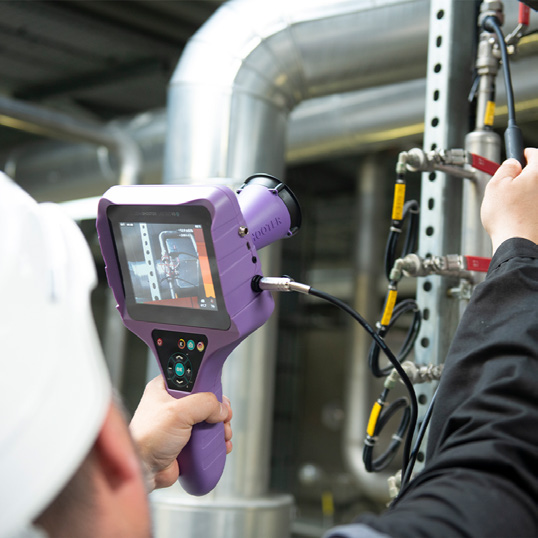
N2O2 uses ultrasonic leak-detection equipment to locate leaks while the compressed air system remains in operation. Each finding includes a photograph, estimated leak rate and annual cost so your maintenance team can prioritize repairs using measurable information.
When Is a Leak Audit Needed?
Your facility may benefit from a compressed air leak audit when you are:
- Seeing higher compressed air energy costs
- Operating compressors more often than expected
- Experiencing low or inconsistent pressure
- Hearing or suspecting leaks throughout the plant
- Losing available system capacity
- Planning a facility-wide repair program
- Repairing leaks without a documented priority list
- Trying to quantify the cost of air loss
Leaks can develop throughout piping, fittings, hoses, valves, drains, regulators and production equipment. A facility-wide survey identifies where those losses are occurring.
What Is Included in the Leak Survey?
N2O2 performs an ultrasonic inspection of compressed air equipment, distribution piping and connection points throughout the facility.
The survey includes:
- Identification of individual leak locations
- A photograph of each documented leak
- Estimated leak rate
- Estimated annual operating cost
- A complete report of all identified leaks
Normal production can continue during the survey.
Why Is Ultrasonic Leak Detection Used?
Industrial background noise can make many compressed air leaks difficult to hear.
Ultrasonic equipment detects the high-frequency sound created by escaping compressed air. This allows leaks to be identified around operating equipment and in active production areas where audible inspection would be less reliable.
The result is a more systematic facility survey and a documented list of findings.
What Does the Leak Report Provide?
The final report gives maintenance teams a clear repair-planning resource.
Each leak entry includes:
- Leak location
- Photograph
- Estimated leak rate
- Estimated annual cost
The report allows leaks to be sorted and prioritized according to air loss and financial impact rather than repaired only in the order they are discovered.
When the leak survey is part of a comprehensive compressed air audit, total estimated leak loss can also be incorporated into the broader system cost analysis and recommendations.
What Can a Leak Audit Help Your Facility Achieve?
Documenting and repairing compressed air leaks may help your facility:
- Reduce unnecessary compressed air consumption
- Lower compressor power costs
- Recover available system capacity
- Improve pressure availability
- Reduce unnecessary compressor runtime
- Create an organized repair plan
- Direct maintenance resources toward the most costly leaks
- Establish a baseline for an ongoing leak-management program
Build a Prioritized Compressed Air Leak Repair Plan
Schedule a compressed air leak audit to document air loss, calculate its annual cost and give your maintenance team a clear list of repairs.